
For most Indian orchards (2–10 acres), a 6.5 HP petrol wood chipper with 80–100mm cutting capacity is the right choice. For small farms and nurseries, a 2.5 kW electric garden shredder is sufficient. For estates of 10+ acres, a PTO tractor chipper delivers the highest throughput. The right model depends on your farm size, crop type, and power availability this guide will help you decide step by step.
This Guide Is for You If…
- You manage a mango, guava, litchi, or any fruit orchard and are dealing with the problem of disposing of pruning waste
- You are looking for a legally compliant solution due to burning bans under NGT or PPCB guidelines
- You are buying a wood chipper for the first time and want to understand which model suits your farm size and crop type
- You want to take advantage of government subsidies and understand the approved vendor process
Why Indian Farms Need a Wood Chipper in 2025
Every year, Indian farms generate millions of tonnes of woody waste pruned mango branches in UP orchards, sugarcane trash in Maharashtra fields, coconut fronds in Kerala, and eucalyptus off in Haryana. Open burning of this waste is now banned or restricted under PPCB and NGT guidelines.
Beyond compliance, there are strong economic reasons to invest in a wood chipper:
Mulch production: Spreading wood chips 5–8 cm deep between orchard rows reduces irrigation by 20–30% in peak summer and controls weeds directly cutting input costs.
Compost acceleration: Chipped biomass decomposes significantly faster than whole branches. Mixed with farm FYM, it produces rich organic compost in 60–90 days.
Biogas feedstock: Chipped woody material can be used as supplementary feedstock alongside cow dung in farm level biogas plants.
Legal compliance: The NGT, CPCB, and state PCBs recognise in-situ crop residue management chipping, mulching, and composting as a legally compliant alternative to open field burning. Farmers using chippers can document their residue management practice to avoid penalties applicable in Punjab, Haryana, and NCR districts.
Agri-tourism & branding: The tidy appearance of FPO demonstration plots and model farms is increasingly important for value-added farm produce branding.
Wood Chipper vs Garden Waste Shredder — What Is the Difference?
| Feature | Wood Chipper | Garden Waste Shredder |
|---|---|---|
| Primary use | Hard branches, logs, stems | Leaves, soft stalks, thin branches |
| Output size | 10–50mm coarse chips | Fine shredded material |
| Best output use | Mulch, biogas feedstock | Compost |
| Cutting capacity | 50mm to 150mm+ | 20mm to 50mm |
| Ideal for | Orchards, plantations | Nurseries, kitchen gardens, RWAs |
Best for Indian farms: For farms with mixed waste hard branches alongside green crop residue a combination shredder chipper or a heavy duty shredder with a hard material setting is the most practical choice.
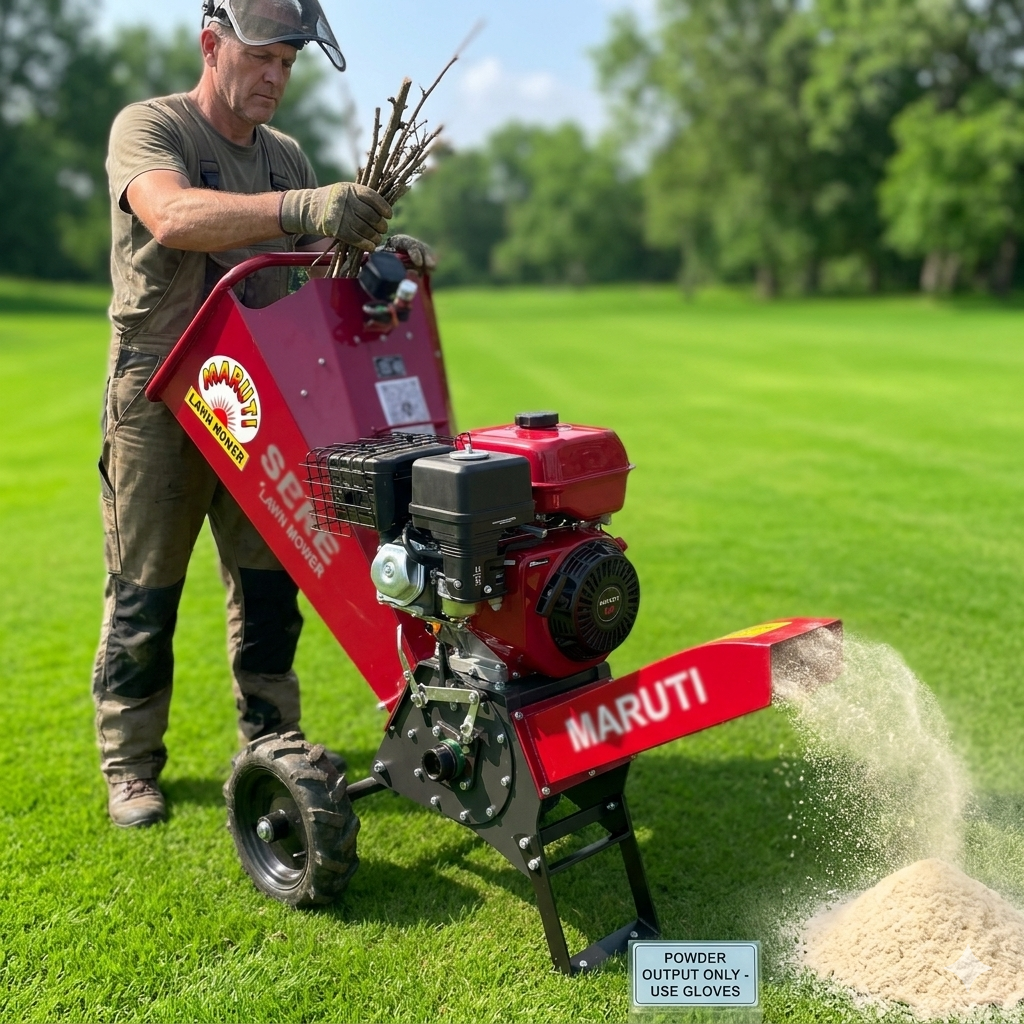
Types of Wood Chipper Machines Suited to Indian Farm Conditions
Not every chipper sold globally is suited to Indian conditions. Monsoon humidity, dusty soil, variable power supply (especially in rural areas), and the mix of crop waste types all influence which machine will serve you reliably for 10–15 years.
1. Drum Wood Chippers
Drum wood chippers machine use a cylindrical drum with fixed blades. They are rugged, handle irregular branch shapes well, and are less prone to jamming from wet or green material. Ideal for post monsoon farm clean up particularly in Kerala, coastal Karnataka, and Assam where wood is often freshly cut and moisture laden.
2. Disc Wood Chippers
A spinning steel disc with mounted knives produces very uniform chips. Preferred when the output is destined for organised compost operations, mushroom cultivation substrate, or biogas plants where chip size consistency matters. Common on large farms in Punjab and Haryana.
3. Drum vs Disc Side by Side Comparison
| Feature | Drum Chipper | Disc Chipper |
|---|---|---|
| Best for | Wet/green wood, post-monsoon clean-up | Dry wood, uniform chip output |
| Output consistency | Medium | High |
| Jam resistance | Better | Lower on wet material |
| Ideal use | Mulch, general farm disposal | Compost, biogas, mushroom substrate |
| Best states | Kerala, Assam, coastal Karnataka | Punjab, Haryana, UP |
4. Electric Garden Waste Shredders (Compact)
For farm homesteads, kitchen gardens, nurseries, and RWA common areas, electric shredders handling branches up to 40–45mm offer a low maintenance, no fuel option. Maruti’s electric garden waste shredder range is specifically engineered for Indian single-phase power supply (220–240V, 50Hz) a critical specification that many imported machines fail on.
5. PTO-Driven Tractor Wood Chippers
Farms with a tractor of 15 HP and above can use a PTO driven chipper that draws power from the tractor’s power take off shaft. This eliminates a separate engine, reduces maintenance points, and delivers 300–500 kg/hour throughput for mid range models. Ideal for large fruit orchards, sugarcane estates, and timber plantations in Madhya Pradesh, Andhra Pradesh, and Telangana.
6. Petrol/Diesel Self Powered Chippers
Where grid power is unreliable in remote UP, Bihar, and northeastern farm districts a selfpowered petrol or diesel chipper is the practical choice. Look for engines from established Indian compatible brands and ensure service networks exist in your district.
Key Specifications What to Compare Before Buying
| Specification | What to Look For in the Indian Farm Context |
|---|---|
| Cutting Capacity (mm) | Minimum 50mm for orchard branches; 80–100mm for mango/guava/eucalyptus; 150mm+ for teak/bamboo |
| Motor / Engine Power | 1.5–3 kW electric for home/nursery; 5–7 HP petrol for mid farm; 15+ HP PTO for large estates |
| Throughput (kg/hr) | 80–120 kg/hr for small farms; 200–350 kg/hr for commercial use; 500+ for estate scale |
| Blade Material | Hardened alloy steel (HRC 55+); replaceable blades preferred for Indian service conditions |
| Voltage (Electric) | Single phase 220–240V 50Hz; avoid 415V 3 phase for farm homesteads without an industrial connection |
| Chip Output Size | 10–30mm for mulch; 5–15mm for compost/biogas; adjustable chip size is a premium feature |
| Mobility | Two behind wheel kit or carry handles for large farms; stationary for fixed nursery/processing units |
| After-Sales Service | Maruti service network covers North and Central India; verify spare blade availability before purchase |
Recommended Models Maruti Wood Chippers for Indian Farms
Indian Rubber Industries (IRI), operating under the Maruti Lawn Mowers Udyog brand, manufactures and distributes garden and farm waste equipment designed specifically for Indian operating conditions.
Small Farms, Nurseries & Kitchen Gardens (Up to 2 Acres)
Maruti Electric Garden Waste Shredder (2.5 kW)
Handles branches up to 40mm. Single phase 220V. Ideal for post pruning clean up, rose garden maintenance, nursery row clean up, and residential farm homesteads. Compact enough to store in a shed or veranda. Contact IRI directly for current pricing.
Best paired with: A Maruti walk behind lawn mower for complete homestead maintenance without outsourcing green waste disposal.
Medium Orchards & Farms (2–10 Acres)
Maruti Petrol Wood Chipper (6.5 HP)
Designed for branches up to 100mm (10cm) diameter. Suitable for mango, guava, litchi, and papaya orchards. Self-powered, eliminating dependence on grid supply during peak post harvest pruning season. Contact IRI for current pricing and dealer availability.
Large Farms, Estates & FPO Clusters (10+ Acres)
Maruti Heavy Duty Drum Chipper / PTO Model
High-throughput drum or disc chipper with tractor PTO interface. Handles hardwoods, bamboo, eucalyptus, and plantation by-products. Contact IRI for commercial pricing and volume supply options for FPO or cooperative farm clusters.
Rent vs Buy Which Is the Right Call?
If you want to try before committing, or only need a chipper for one season:
- Rent if your orchard is under 1 acre or your pruning season lasts only 2–3 weeks
- Buy if you manage 2+ acres, prune every year, or want to regularly produce mulch or compost ROI typically comes within the first 2 seasons
- FPO shared ownership 3–4 farmers can jointly purchase a PTO chipper and share costs, which is the most cost effective option for a large machine
State-wise Buying Guide Best Chipper for Your Region
Punjab & Haryana Wheat, Paddy & Fruit Belts
Post-harvest paddy straw is bulky but relatively soft a disc chipper or shredder handles it well. However, the more pressing need comes from orchard pruning waste in the growing kinnow citrus, pear, and mango orchards of Amritsar, Ludhiana, and Kurukshetra districts. A mid-range petrol or diesel chipper (6–10 HP) with 80–100mm capacity covers most needs here. NGT and PPCB pressure makes compliance a strong purchase motivator.
Uttar Pradesh Mango, Sugarcane & Mixed Horticulture
UP’s vast mango belt (Malihabad, Lucknow, Varanasi) generates enormous orchard pruning waste every year. Sugarcane tops and leaves are another major waste stream near Muzaffarnagar, Meerut, and Gorakhpur. A PTO tractor chipper or heavy-duty petrol model is recommended for farm clusters here. Power supply irregularity in eastern UP makes petrol/diesel self-powered models the more practical choice.
Maharashtra Grapes, Pomegranate, Banana & Sugarcane
Nashik’s grape and pomegranate farms generate pruning waste multiple times per year. Solapur and Sangli sugarcane estates deal with trash after each harvest cycle. Electric shredders work well near Pune and Nashik where grid supply is reliable; diesel chippers are preferred in Marathwada and Vidarbha. FPO procurement groups in Maharashtra actively seek fleet pricing contact IRI for B2B quotations.
Karnataka & Kerala Coconut, Coffee, Areca & Spice Farms
Coconut fronds, coffee prunings, areca palm waste, and spice garden trimmings define the farm waste stream in these states. These materials are fibrous and often moisture-laden — a drum chipper with a corrosion-resistant finish performs best in coastal humidity conditions. Kerala’s small land-holding structure (average 0.5 acre) makes lightweight, portable electric models with wheels a practical fit.
West Bengal & Northeast Tea Gardens, Bamboo & Mixed Farms
Tea garden pruning and bamboo farm waste in Assam, Darjeeling, and the Northeast require machines capable of handling fibrous bamboo stems. Look for heavy-duty drum chippers with dedicated bamboo-rated blade sets. Maruti’s commercial range handles bamboo up to 100mm in diameter.
Government Subsidy on Wood Chipper 2025 How to Claim It
Under the Rashtriya Krishi Vikas Yojana (RKVY) and Mission for Integrated Development of Horticulture (MIDH), eligible farmers can receive a 25–50% subsidy on approved farm machinery, including wood chippers and biomass shredders.
Key conditions:
- Purchase from registered manufacturers/dealers on the state approved vendor list
- Machine must be used for agricultural purposes (not commercial resale of chips)
- Application must be submitted before purchase through your state Agriculture or Horticulture Department portal
- SC/ST farmers and women farmer groups receive higher subsidy rates in most states
IRI/Maruti can assist with documentation for subsidy claims where the product is listed under state agricultural machinery portals. Contact the IRI team with your state and land holding details for guidance.
Buying Tips Common Mistakes Indian Farm Buyers Make
Underestimating branch diameter: Buyers often purchase a small-capacity machine for a mango orchard where mature branches are 80–120mm thick. Always measure your thickest pruning before choosing capacity.
Ignoring chip output size: If you intend to sell chips or use them as mushroom substrate, chip size consistency matters. Disc chippers produce more uniform output than drum chippers.
Buying 3-phase electric where only single-phase is available: A very common mistake always confirm your power connection type before ordering an electric shredder.
Skipping the after-sales check: An imported machine with no Indian service network becomes an expensive ornament after the first blade dulls. Maruti machines are serviced through IRI’s North India dealer network with Indian-sourced spares.
Missing the seasonal window: Buy before the pruning season availability is better in February–March (pre-summer pruning) and October (post-monsoon orchard season) than during peak harvest months.
Missing subsidy opportunities: Several state governments including UP Horticulture Department, MP Agriculture, and Karnataka Horticulture Mission offer subsidies under RKVY and MIDH schemes for farm machinery including chippers. Verify eligibility before purchasing.
Gardening Equipment Youtube Channel
Lawn Mower Instagram
Lawn Mower Facebook
Maintenance Calendar For Indian Farm Conditions
| Interval | Maintenance Task |
|---|---|
| After every use | Clear chip discharge chute; wipe down feed hopper; check for lodged material in drum/disc |
| Every 25 hours | Inspect and sharpen blades; check blade bolt torque; clean air filter (petrol/diesel models) |
| Every 50 hours | Lubricate bearings; check belt tension; inspect feed roller teeth for wear |
| Before monsoon storage | Apply rust inhibitor to disc/drum; drain fuel (petrol models); cover discharge and feed openings |
| Annual service | Full blade replacement or professional sharpening; belt replacement; bearing inspection; engine service |
Blade replacement tip: Under typical Indian farm use processing dry mango, eucalyptus, or guava branches chipper blades need sharpening every 25–30 hours of operation. Full blade replacement is typically required after 3–5 sharpenings, roughly one full pruning season. Blades cutting sandy or soil-contaminated material dull faster rinse branches before feeding when possible.
Where to Buy Maruti Dealers & Contact
Indian Rubber Industries (IRI) manufacturer and national distributor of Maruti-brand garden and farm equipment operates direct sales and an authorised dealer network covering Delhi, NCR, UP, Haryana, Punjab, Rajasthan, Madhya Pradesh, and Maharashtra.
- Factory & Head Office: Delhi (direct sales, bulk enquiries, government tenders)
- Online Enquiry: www.indianrubberindustries.com/contact/
- Dealer Network: Available in major mandi towns and agricultural market centres across North India
Frequently Asked Questions (FAQ)
Which wood chipper machine is best for a small Indian farm?
For small farms up to 2 acres, an electric garden waste shredder with a 2.2–3 kW motor and 40–50mm branch capacity is the most practical choice. It requires no fuel, produces low noise, and handles typical fruit tree prunings, vegetable garden waste, and hedge trimmings efficiently. Maruti’s electric shredder range from IRI is designed for single-phase Indian power supply and comes with Indian-sourced spare blades. Contact IRI directly for current pricing.
How much does a wood chipper machine cost in India?
Wood chipper pricing in India varies by machine type, engine power, and cutting capacity from compact electric shredders to heavy-duty industrial drum chippers. For accurate and up-to-date pricing, it is best to contact IRI/Maruti directly, as prices vary by model, dealer location, and available offers. GST (18%) is also applicable.
Can a wood chipper handle sugarcane trash and paddy straw?
Yes. A standard wood chipper with rotating drum or disc blades can process sugarcane tops and dry paddy stalks. However, wet or freshly harvested material can clog some disc models. For sugarcane trash processing, a heavy-duty drum chipper or purpose-built biomass shredder with a wider feed opening is recommended. Sharpen blades before the harvest season to handle fibrous crop residue effectively.
Is there a government subsidy available for buying a wood chipper in India?
Yes. Under RKVY and MIDH schemes, farmers can receive a 25–50% subsidy on approved farm machinery including wood chippers and biomass shredders. Eligibility and the approved vendor list vary by state. Apply through your state’s Agriculture or Horticulture Department portal before making a purchase. SC/ST farmers and women farmer groups typically receive higher subsidy percentages.
What size wood chipper do I need for a mango orchard?
Mature mango trees produce pruning branches ranging from 20mm to over 100mm in diameter. For a standard mango orchard, a chipper with minimum 80–100mm cutting capacity is recommended. A petrol or diesel self-powered model (6–10 HP) is ideal for field use where power access is limited. PTO tractor-driven chippers offer the highest throughput for larger mango estates above 10 acres.
Can wood chips be used as mulch in Indian farm conditions?
Yes. Wood chip mulch is highly effective in Indian orchard and vegetable farm conditions. Applied at a 5–8 cm depth between rows, chips retain soil moisture (reducing irrigation by 20–30% in peak summer), suppress weed growth, and gradually improve soil organic carbon as they decompose. Chips from mango, eucalyptus, and neem are particularly effective due to their slow decomposition rate.
Is wood chipping recognised as an alternative to crop residue burning under Indian law?
Yes. The NGT, CPCB, and state PCBs recognise in-situ crop residue management including chipping, mulching, and composting as a legally compliant alternative to open field burning. Farmers using chippers can document their residue management practice to demonstrate compliance with PPCB/NGT orders and avoid penalties applicable in Punjab, Haryana, and NCR districts.
How often do wood chipper blades need replacing in Indian farm use?
Under typical Indian farm use processing dry mango, eucalyptus, or guava branches chipper blades need sharpening every 25–30 hours of operation. Full blade replacement is typically required after 3–5 sharpenings, roughly one full pruning season. Blades cutting sandy or soil-contaminated material (a common Indian farm issue) dull faster rinse branches before feeding when possible.
Drum vs disc chipper which is better for Indian farms?
A drum chipper is better for wet or green wood, particularly in post-monsoon periods, and is preferred in coastal states like Kerala, Karnataka, and Assam. A disc chipper is better for producing uniform chips from dry wood — ideal for compost operations, mushroom substrate, or biogas plants, and common on organised farms in Punjab and Haryana. If you need mulch or general disposal, choose a drum. If chip size consistency is important, choose a disc.
Conclusion – Choosing the Right Wood Chipper for Your Indian Farm
The right wood chipper for your farm depends on four factors: branch diameter, farm acreage and throughput need, power supply availability, and intended chip use (mulch, compost, or biogas).
For most Indian orchards and mid-size farms, a petrol-powered 6–10 HP chipper with 80–100mm cutting capacity delivers the best balance of performance, portability, and long-term value.
Maruti-brand wood chippers and garden shredders from Indian Rubber Industries (IRI) are built for Indian operating conditions monsoon humidity, dusty soil, variable power, and the specific crop waste streams from Indian orchards and estates. With a service network across North and Central India and Indian sourced spare blades, Maruti equipment delivers the long-term reliability that imported machines often fail to match.
Ready to choose? Browse the complete Maruti equipment range or contact the IRI Delhi team for a personalised recommendation, dealer referral, or bulk farm order quotation.
This guide has been prepared in collaboration with Indian agricultural field experts and IRI/Maruti product specialists with 50+ years of experience in the farm equipment sector across North and Central India. Government scheme details and product specifications are updated regularly — always confirm current information directly with IRI or through your state’s Agriculture Department portal.
